
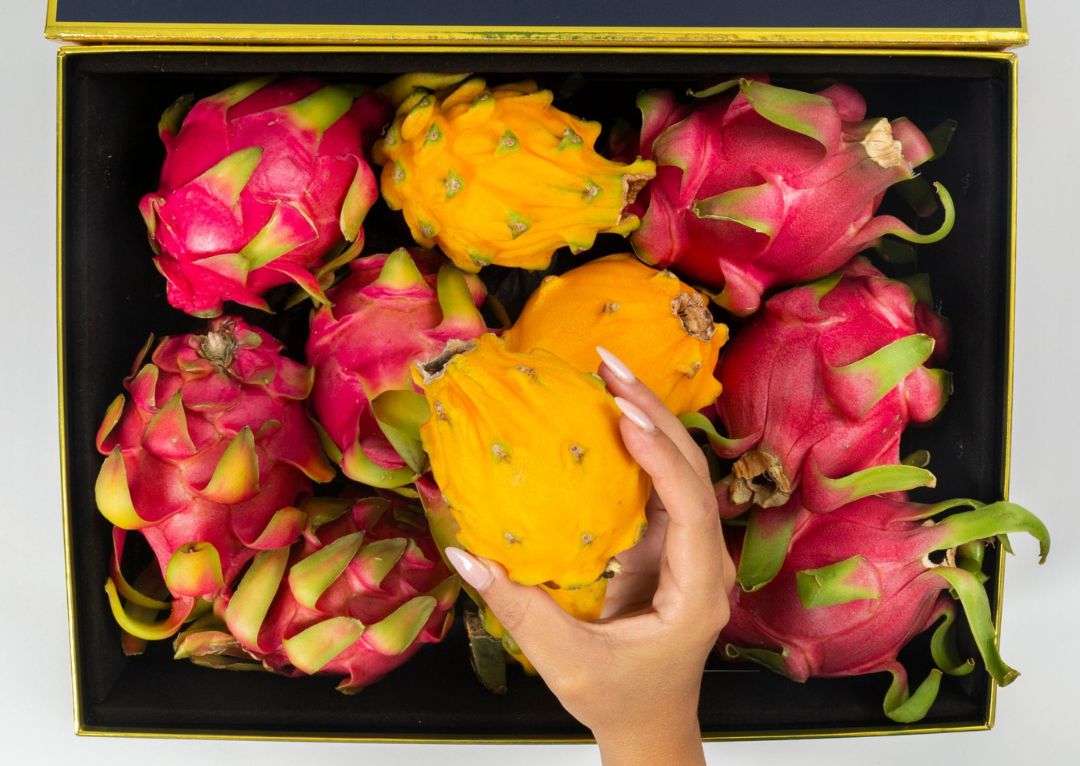
Have you ever noticed a mango turning from green to yellow or a dragon fruit developing brighter skin as it ripens? These colour changes aren't just for show; they're part of a natural process that signals a fruit is becoming sweeter, softer and ready to eat.
Here's what's happening behind the scenes.
It's all about natural pigments
As fruit ripens, the pigments inside its skin begin to change. Green colouring, caused by chlorophyll, gradually breaks down, allowing other pigments to become more visible.
These include yellow and orange carotenoids, as well as red and purple anthocyanins, which give many fruits their vibrant appearance. The result is the beautiful range of colours we associate with perfectly ripe tropical fruit.
Ripening changes more than colour
Colour isn't the only thing that changes. As fruit matures, natural starches are converted into sugars, making it taste sweeter. At the same time, the flesh softens and aromas become more noticeable.
These changes help attract animals in the wild, which eat the fruit and disperse its seeds, allowing the plant to reproduce.
Do all exotic fruits change colour?
Not always. Some varieties, such as certain dragon fruits, are already brightly coloured before they're fully ripe. Others, including many mangoes and papayas, become noticeably more colourful as they mature.
That's why colour should be considered alongside other signs, such as a gentle softness when pressed and a pleasant fruity aroma.
Choosing fruit at its best
One of the benefits of buying a carefully curated exotic fruit box is that the fruit has been chosen for quality and eating condition. Instead of guessing whether a fruit is ready, you can enjoy a selection that's been picked with flavour in mind.
From a colourful dragon fruit box to a selection of perfectly ripened tropical favourites, every piece of fruit has its own journey from plant to plate.