
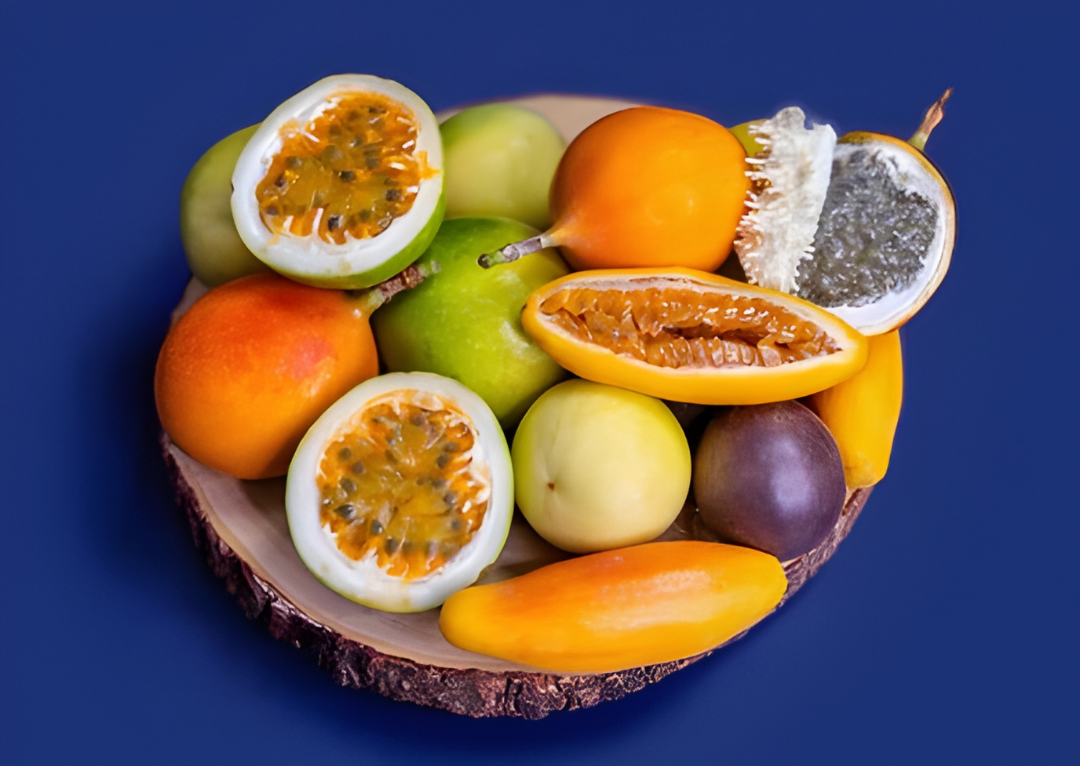
Unboxing an exotic fruit delivery for the first time is exciting, but how do you know when they’re ripe and ready to eat? Unlike apples or bananas, tropical fruits can look unfamiliar, which makes it harder to judge when they’re at their best.
In fact, all you need to do is make a few quick and simple checks to help you enjoy them at peak flavour. Here’s what to look out for!
Look at the colour
Colour is often the first clue. Many exotic fruits become brighter or deeper in colour as they ripen. For example, mangoes usually develop rich yellow, orange or red tones, while fruits like dragon fruit turn a vibrant pink.
However, colour alone isn’t always enough. Some fruits stay green even when ripe, so it’s best to combine this with other signs.
Give it a gentle squeeze
Just like avocados or peaches, many tropical fruits soften slightly as they ripen. A ripe fruit should feel slightly soft when gently pressed, but not mushy.
If the fruit feels rock hard, it may need a few days at room temperature. If it feels very soft or has wrinkled skin, it may be overripe.
Check the aroma
Ripe exotic fruits often have a sweet, fragrant smell, especially near the stem. Mangoes, papayas and pineapples are good examples: when ripe, they release a tropical aroma that signals they’re ready to enjoy. If a fruit has little or no scent, it may still need time to ripen.
Pay attention to the skin
The skin of many fruits changes as they mature. Small speckles, slight dulling of the skin, or natural texture changes can all be signs of ripeness. Avoid fruit with large bruises, deep cuts or leaking juices.
When in doubt, give it time
Most exotic fruits will continue to ripen naturally at room temperature. If you’re unsure, leave them out for a day or two and check again.
Once ripe, many fruits can be stored in the fridge to keep them fresh for longer, giving you time to enjoy every delicious bite.